1
Clearly stated FU
The label should state enzyme activity in fibrinolytic units — not only milligrams.
 Health Report
Cardiovascular Research Report · Updated 2026
A simple look at plaque, clot formation, fibrin, blood pressure, and why researchers became interested in an enzyme found in traditional Japanese natto.
Sponsored educational report by Novelle · 7 min read
The question most people never ask
A cholesterol panel tells you how much — and which types — of cholesterol are circulating in your blood. A blood pressure cuff tells you how hard that blood is pushing against your artery walls.
Both are genuinely useful. But neither takes a picture of the artery wall, where plaque actually forms.
What it tells you
LDL, HDL, triglycerides and related blood markers
What it doesn't directly show
Plaque already present inside the artery wall
That's why doctors look at cholesterol alongside blood pressure, smoking, diabetes, age, family history — and sometimes imaging — to judge overall risk.
Inside the artery
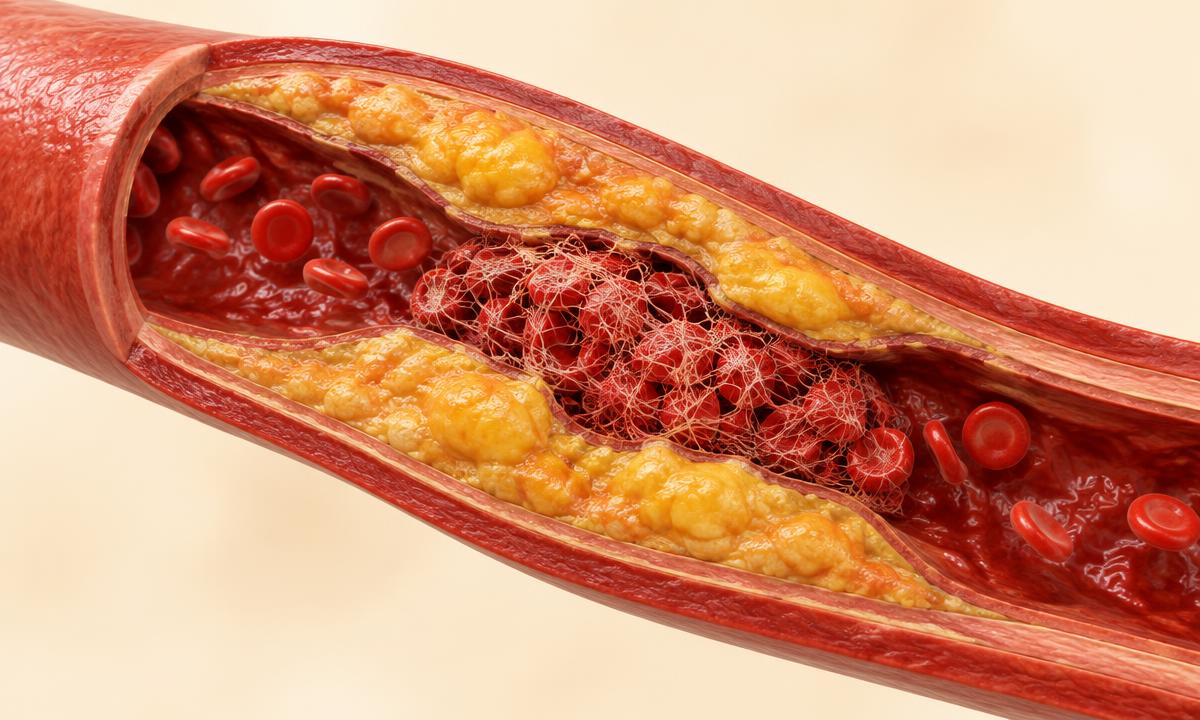
Plaque isn't one simple thing. It can contain cholesterol and other fats, inflammatory cells, fibrous tissue and calcium — built up slowly over years, narrowing the artery from the inside.
As plaque grows, the artery wall itself thickens. Doctors can measure that thickness directly with an ultrasound of the carotid artery in your neck — which is exactly how the study below was run.
The study behind this idea
~1,060 adults · ~10,800 FU per day · 12 months
Researchers monitored the carotid arteries of participants taking about 10,800 FU of nattokinase daily. Over the year, they reported reductions in artery wall thickness and plaque size.
Because the study was observational, it can't prove nattokinase caused those changes. But it's the key result behind the idea that the enzyme may help reduce arterial plaque.
Start of study
Plaque measured on ultrasound
12 months later
Reported reductions in wall thickness and plaque size
How could an enzyme shrink plaque? Exactly how is still being studied. The working idea is that nattokinase supports the body's own clean-up processes inside the vessel wall, helping clear the material plaques are partly made of. That's a hypothesis, not a settled fact.
A traditional food
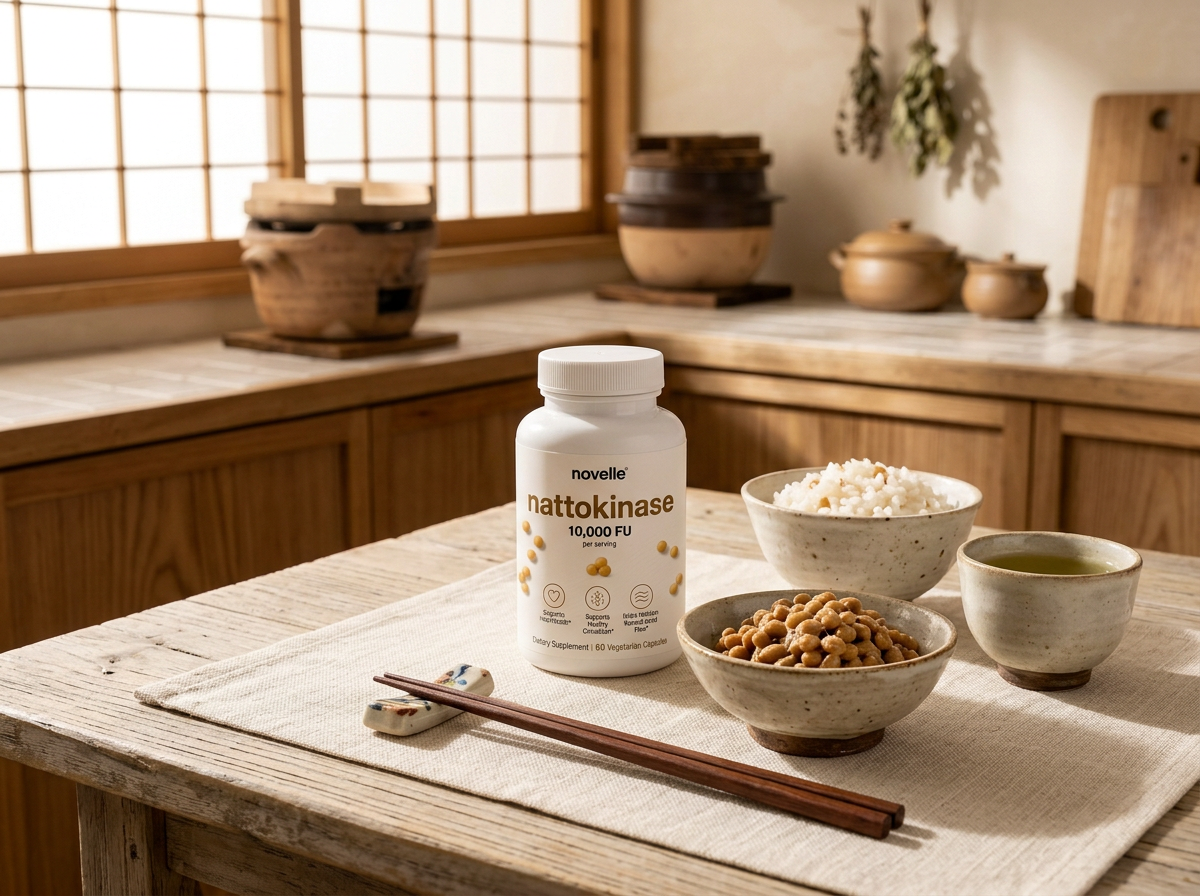
Natto is fermented soybeans, eaten in Japan for centuries.
During fermentation, the bacterium Bacillus subtilis produces an enzyme called nattokinase.
Nattokinase has been studied for effects related to fibrinolysis, clotting-related markers, blood pressure, and cardiovascular health.
The specification that matters
FU = Fibrinolytic Units. FU measures what the enzyme does — its fibrinolytic activity.
Milligrams only describe weight. The two are not interchangeable.
Product A
100 mg nattokinase
FU not stated
→ Actual enzyme activity unclear from the label
Product B
10,000 FU stated
Activity on the label
→ Enzyme activity clearly specified
A higher FU number means higher stated activity on that assay basis. It does not automatically mean proportionally better health outcomes.
Buyer's guide
The label should state enzyme activity in fibrinolytic units — not only milligrams.
Human studies have used different doses, and results have been mixed. Look at the dose actually provided and compare it with doses used in published research.
Look for transparent sourcing and established manufacturing standards, so you know where the enzyme was fermented and made.
Enzymes can lose activity through heat and handling. A batch certificate gives you more confidence the label matches the bottle.
With these four checks, you can compare any nattokinase label in about a minute.
Applying the checklist
Here's how one product — Novelle Nattokinase — compares against the same four criteria.
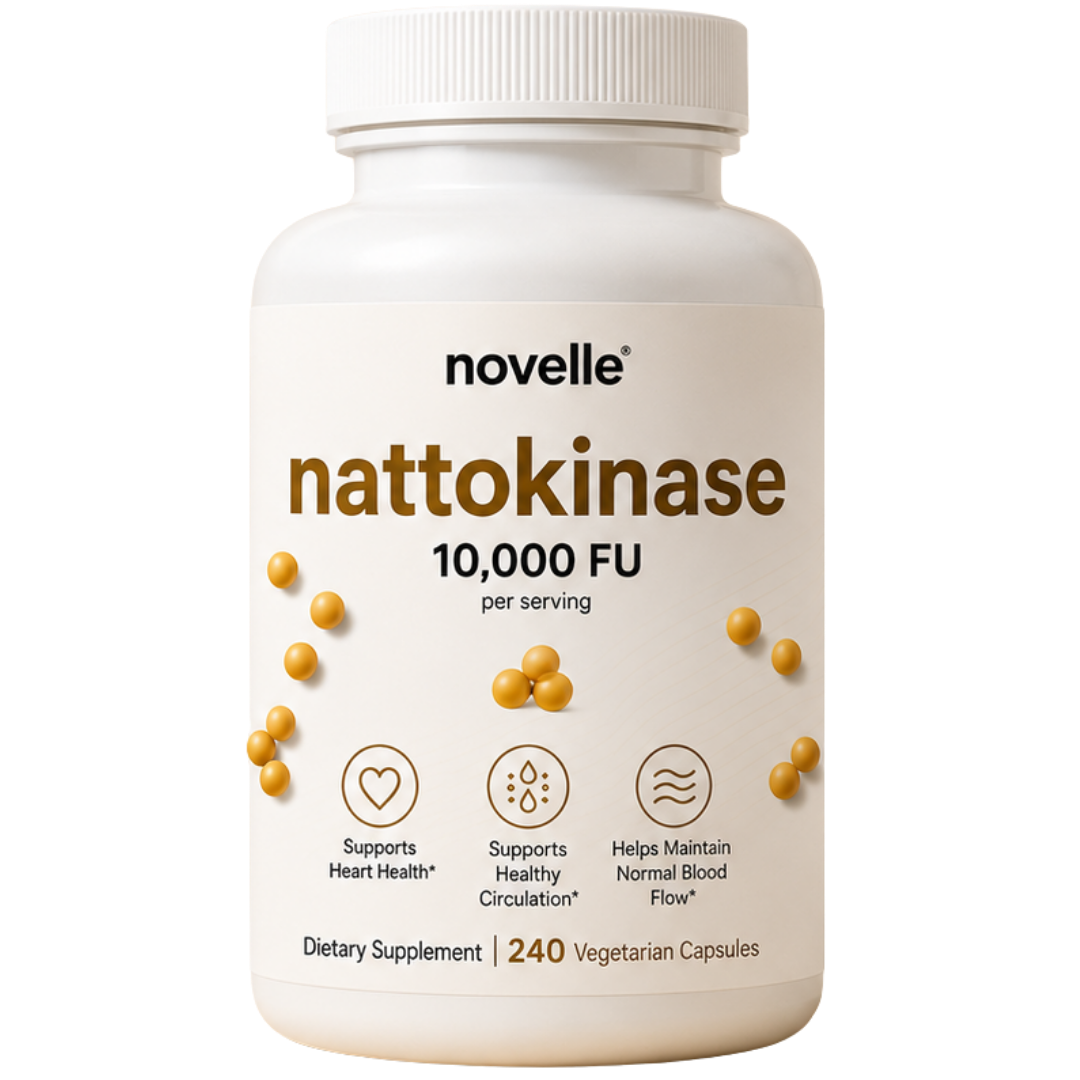
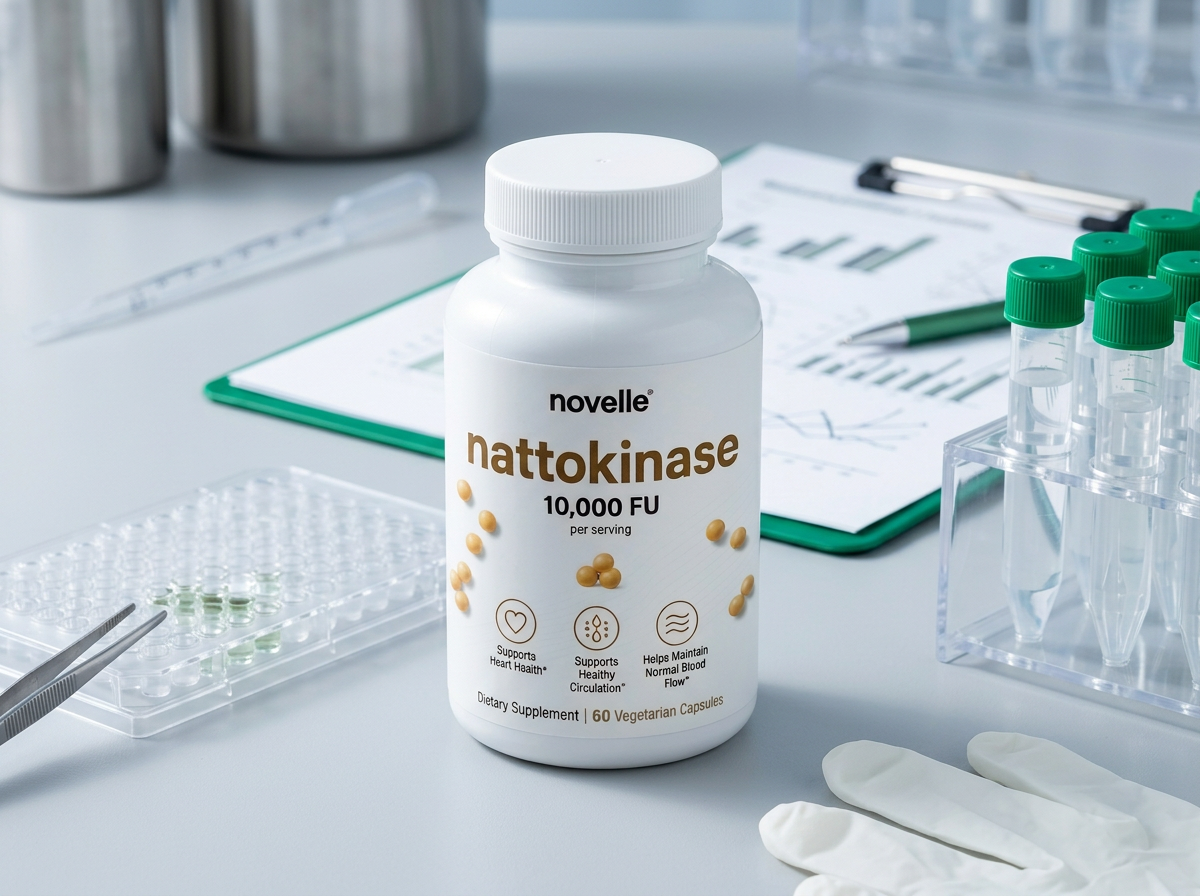
View ingredients, pricing, bundles, reviews & 90-day guarantee.
Sponsored educational content by Novelle. These statements have not been evaluated by the Food and Drug Administration. This product is not intended to diagnose, treat, cure, or prevent any disease. This page is for education only and is not medical advice.